If you’re researching a new cooling system for your home, you’ve probably come across terms like HVAC system, air conditioner, ductless air conditioner, or mini split. For many homeowners, those terms can start to sound interchangeable, but they’re actually describing different types of comfort systems.
As summer temperatures heat up across Kansas City, choosing the right cooling solution can have a major impact on your comfort, energy usage, and long-term maintenance costs.
Top Notch Heating, Cooling & Plumbing regularly hears:
“Should I install a traditional HVAC system or a ductless mini split?”
The answer depends on your home’s size, layout, existing ductwork, and comfort goals. Let’s break down the differences and help you understand which system may be the better fit for your home.
The Differences Between AC Unit and HVAC System
Many homeowners use the terms AC and HVAC interchangeably, but they aren’t exactly the same thing.
An air conditioner is designed specifically to cool your home. During warmer periods, it removes heat and humidity from your home’s air to maintain a comfortable temperature.
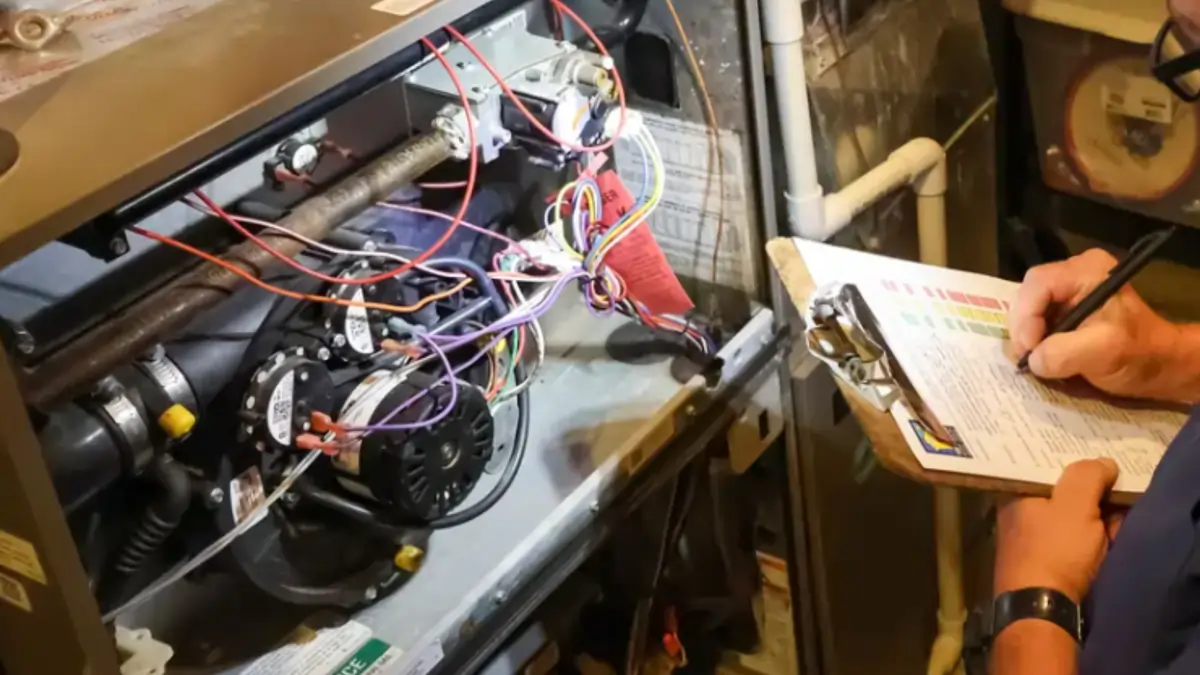
An HVAC system, on the other hand, is an all-encompassing term to include both your heating and cooling equipment. In most Kansas City homes, that means a furnace, air conditioner, ductwork, thermostat, and air filtration components all working together as one complete comfort system.
For the average home in the Kansas City metro area, a traditional, central HVAC system remains the most common setup because it provides reliable heating and cooling throughout all four seasons.
What Is a Ductless Air Conditioner?
A ductless air conditioner works exactly as the name suggests, it cools your home without relying on ductwork.
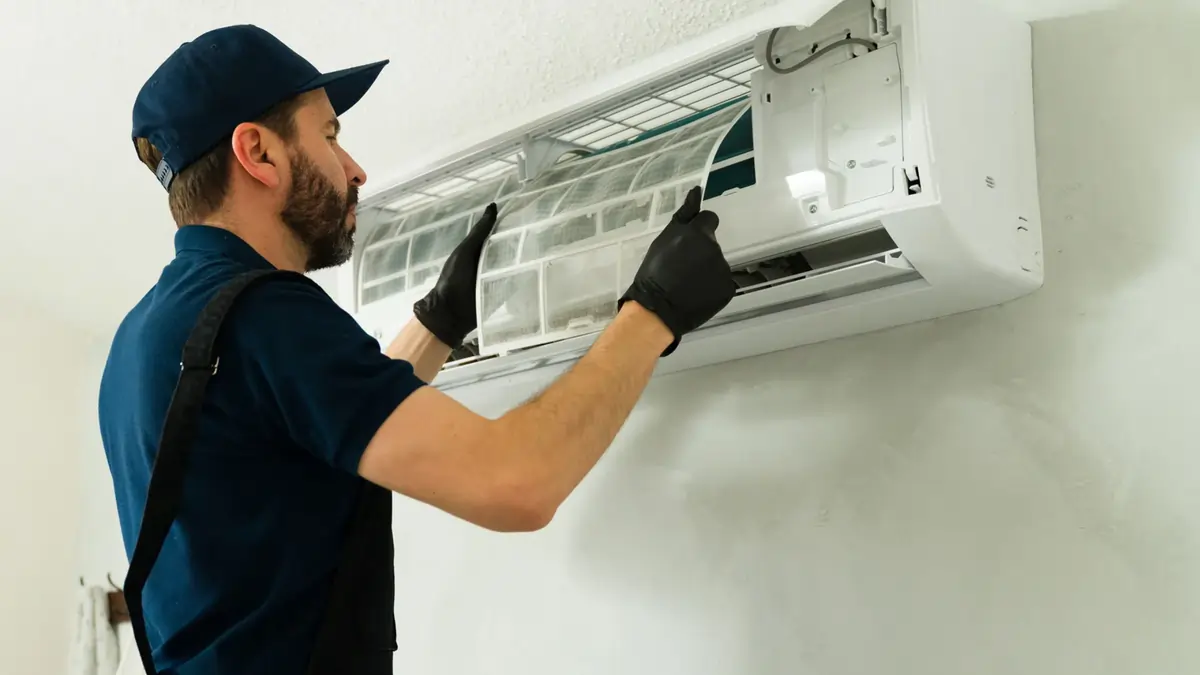
Instead of pushing cooled air through vents located throughout the home, a ductless system delivers conditioned air directly into the room through an indoor air handler mounted on a wall or ceiling. This design eliminates the need for expensive duct installation and helps reduce energy loss that can occur within aging duct systems. Ductless systems have become increasingly popular in Kansas City homes, especially in situations where traditional ductwork isn’t practical. They’re easy to incorporate into home additions, garages, sunrooms, and more. Give Top Notch Heating, Cooling & Plumbing a call to learn more!
What Is a Mini Split?
A mini split AC unit is one of the most common types of ductless HVAC systems available today.
The system is made up of two primary components:
- An outdoor condenser unit
- One or more indoor air handlers
The term “mini split” comes from the fact that the system is split between indoor and outdoor equipment. One of the biggest advantages of mini split cooling systems is their ability to create distinct zones throughout your home for customized comfort, instead of 1 thermostat controlling 1 average temperature. For example: You may prefer your bedroom at 68 degrees while keeping guest rooms slightly warmer. Give Top Notch Heating, Cooling & Plumbing a call to learn more about mini split system installation!
What Type of Cooling System does my Kansas City Home Need?
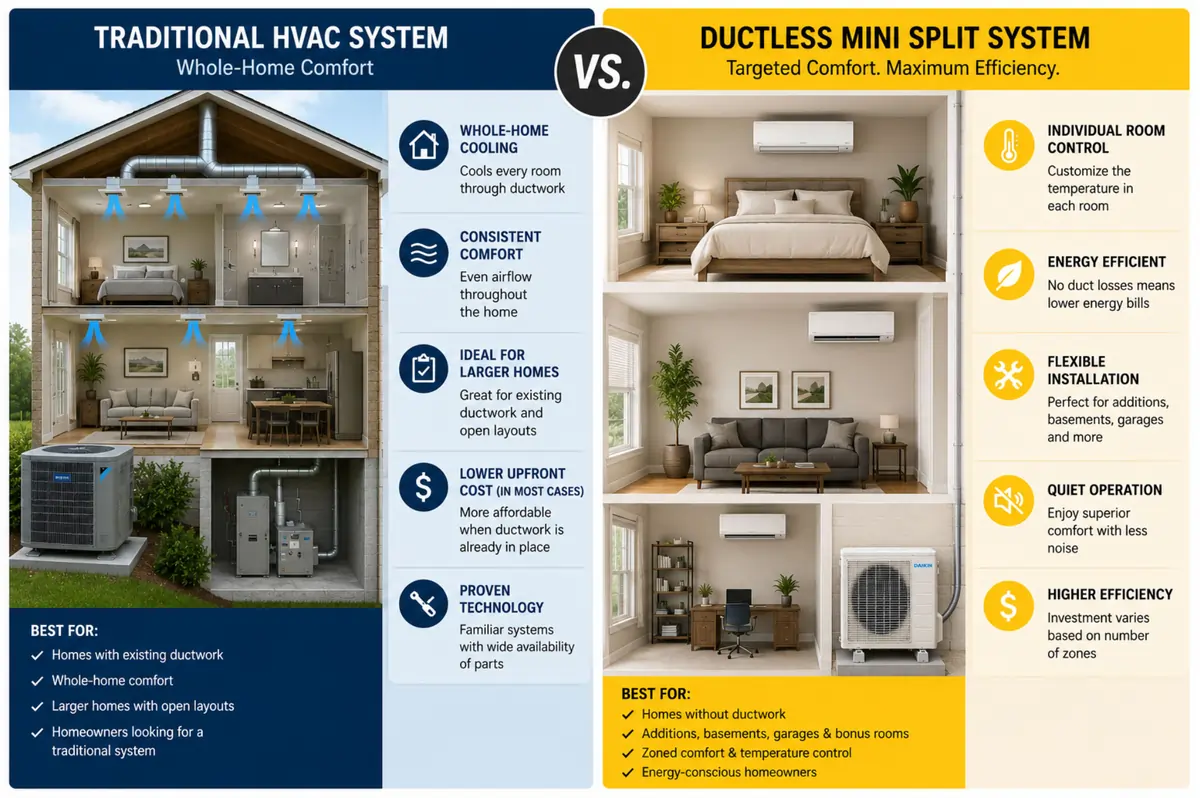
For homes with existing ductwork that is in good condition, a traditional HVAC system often makes the most sense. It can efficiently cool the entire home while working with equipment that’s already in place. However, homes without ductwork, or homes that consistently struggle with hot and cold spots, may benefit from a ductless AC solution. Let Top Notch Heating, Cooling & Plumbing be the one to remind you that you can take a hybrid approach; utilize both! A growing number of homeowners are combining traditional HVAC systems with ductless mini splits to improve comfort in problem areas.
Kansas City Homes Run on Dakin FIT Systems
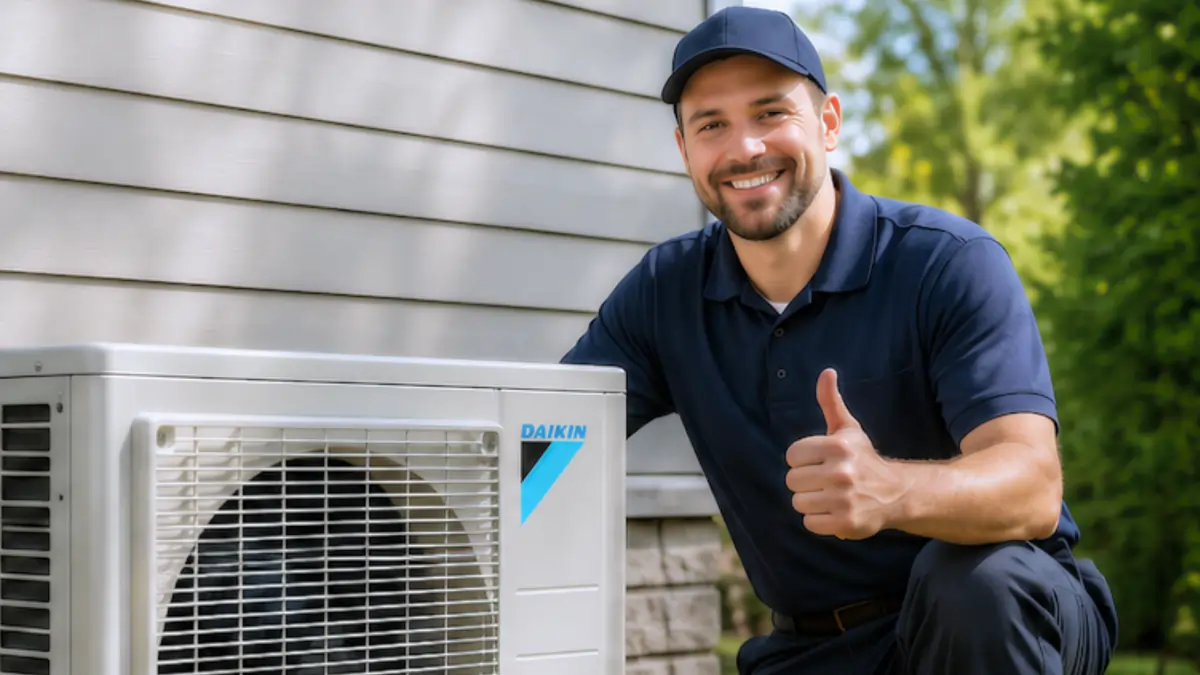
For homeowners looking for the best of both worlds, compact systems like the Daikin FIT are becoming increasingly popular. Daikin FIT offers many of the efficiency benefits homeowners want while maintaining the look and feel of a traditional HVAC installation. Give Top Notch Heating, Cooling & Plumbing a call today to learn more about Daikin FIT systems!
Traditional HVAC vs. Ductless Mini Split FAQs
An air conditioner provides cooling, while an HVAC system includes both heating and cooling components.
In many situations, yes. Because mini splits don't rely on ductwork, they often reduce energy losses and improve efficiency. Call Top Notch Heating, Cooling & Plumbing to learn more.
Yes. Multi-zone mini split systems can be designed to cool an entire home. Schedule service with Top Notch Heating, Cooling & Plumbing today to get started.
Absolutely! They're one of the most popular solutions for homes that were built without ductwork. Give Top Notch Heating, Cooling & Plumbing a call to learn more about ductless cooling systems.
Most professionally installed systems last between 15 and 20 years with proper maintenance. Give Top Notch Heating, Cooling & Plumbing a call to learn more.
The best choice depends on your home's layout, existing ductwork, and comfort goals. Call Top Notch Heating, Cooling & Plumbing for an expert opinion!